

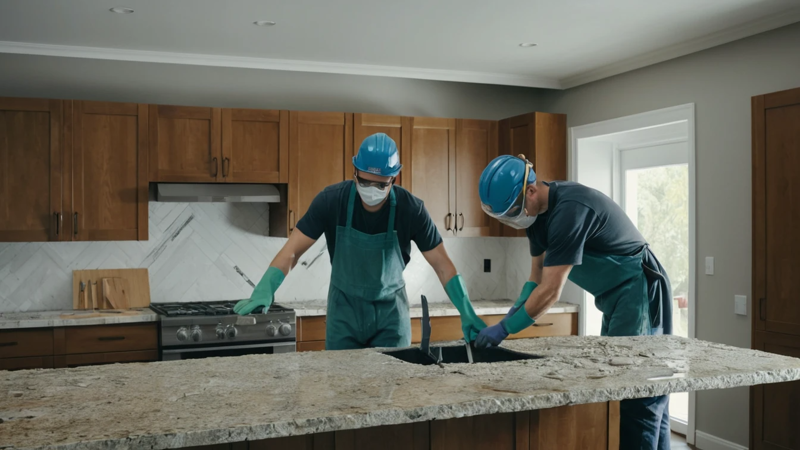
How to remove granite countertops without damage using simple tools, expert steps, and safety tips. Perfect for DIY homeowners.
How to remove granite countertops safely requires the right tools, patience, and a clear step-by-step process. You must disconnect plumbing, loosen adhesive, support the slab, and lift carefully to avoid cracks or injuries. With planning and care, homeowners can remove granite without damaging cabinets or walls.
Ever looked at your granite countertop and wondered, “How hard could it be to remove this thing?” 🤔
It looks solid, permanent, and intimidating. But here’s the truth—granite countertops can be removed safely with the right approach.
If you’re replacing countertops, remodeling your kitchen, or saving granite for reuse, this guide walks you through everything. You’ll learn what tools to use, what mistakes to avoid, and how to protect yourself and your cabinets. Let’s break it down step by step.
Table of Contents
How To Remove Granite Countertops 🛠️
Removing granite countertops is a careful demolition process, not brute force. Granite is heavy, brittle, and expensive to replace if cracked. The goal is to separate the slab from cabinets and walls without damage.
This guide assumes you want a clean removal, not destruction. If you’re demolishing everything, the steps change slightly. For most homeowners, precision matters more than speed.
Understand The Weight And Risks First ⚠️
Granite countertops are heavier than most people expect. A single slab can weigh 200–400 pounds. That weight alone makes solo removal unsafe.
Granite can also crack suddenly under uneven pressure. One wrong lift can shatter an expensive slab. Safety planning matters more than strength here.
Before touching tools, plan for:
- At least 2–4 helpers
- Clear walking paths
- Protective gear like gloves and goggles 😷
Tools And Supplies You’ll Need 🧰
Having the right tools saves time and prevents damage. Don’t start without everything ready.
You’ll need:
- Pry bar or flat crowbar
- Putty knife or paint scraper
- Utility knife
- Adjustable wrench
- Screwdriver set
- Shims or wooden blocks
- Heavy-duty gloves and safety glasses
A suction cup lifter is optional but helpful for lifting slabs safely.
| Tool | Purpose | Why It Matters |
| Pry Bar | Loosening granite | Prevents cracking |
| Putty Knife | Cutting adhesive | Protects cabinets |
| Shims | Supporting slab | Controls weight |
| Safety Gear | Injury prevention | Required for safety |
Shut Off Plumbing And Appliances 🚿
Before lifting anything, disconnect all plumbing. Water lines left connected can tear out pipes or valves.
Start by:
- Turning off water supply valves
- Disconnecting sink drain pipes
- Removing garbage disposal connections
- Unplugging dishwashers or cooktops
Dry everything thoroughly. Water and granite dust don’t mix well.
Remove The Sink And Fixtures First 🚰
Sinks are often attached under the granite. Removing them reduces weight and avoids damage.
Steps include:
- Cutting silicone sealant around the sink
- Supporting the sink from below
- Loosening mounting clips
- Lowering the sink carefully
Set sinks aside on padded surfaces. Avoid placing them directly on hard floors.
Cut Through Caulk And Sealant 🔪
Granite is usually sealed to walls with caulk or silicone. This must be cut cleanly before lifting.
Use a utility knife to:
- Slice along backsplash seams
- Cut between granite and walls
- Remove visible adhesive beads
Go slow. Rushing can chip drywall or tile. Clean cuts make reinstallation easier.
Locate And Remove Mounting Brackets 🔩
Some granite countertops are secured with metal brackets or screws under the slab.
Check inside cabinets for:
- L-brackets
- Screws driven into plywood
- Hidden fasteners near edges
Remove all screws completely. Missing even one can crack the slab during lifting.
| Fastener Type | Location | Removal Tip |
| L-Brackets | Inside cabinets | Use flashlight |
| Screws | Under plywood | Support slab |
| Clips | Near sink cutouts | Remove evenly |
Loosen The Granite From The Cabinets 🪵
Now comes the delicate part. Granite is often glued to plywood bases.
Insert a putty knife or pry bar gently:
- Start at corners
- Apply slow, even pressure
- Work around the perimeter
Use wooden shims to hold gaps open. This prevents sudden drops or stress cracks.
Support The Slab Before Lifting 🧱
Never lift granite without proper support underneath. Unsupported sections can snap.
Place:
- Wooden blocks under edges
- Shims at stress points
- Helpers evenly spaced along length
This step protects both the granite and your cabinets.
Lift The Granite Countertop Safely 🧍♂️🧍♀️
This is a team lift, not a solo job. Count out loud and lift together.
Key lifting tips:
- Lift straight up first
- Avoid twisting motions
- Keep slab vertical, not flat
Carry granite upright like glass. Flat carrying increases cracking risk.
| Slab Size | People Needed | Carry Position |
| Small Section | 2 People | Vertical |
| Medium Slab | 3 People | Vertical |
| Large Slab | 4+ People | Vertical |
Move And Store Granite Properly 📦
Once removed, granite must be stored correctly to prevent damage.
Store granite:
- Upright against padded walls
- On A-frames if available
- Away from foot traffic
Never lay granite flat on concrete floors. That’s a common and costly mistake.
Remove Backsplash Pieces Separately 🧩
Backsplashes are thinner and easier to crack. Remove them after the main slab.
Steps include:
- Cutting caulk along seams
- Gently prying from edges
- Supporting pieces during removal
Wrap backsplash pieces individually with padding.
Clean And Inspect Cabinets After Removal 🧼
Once granite is gone, inspect cabinets and walls.
Check for:
- Adhesive residue
- Screw holes
- Cabinet alignment issues
Scrape off glue gently. Avoid soaking wood with water.
Common Mistakes To Avoid 🚫
Many granite removals fail due to simple mistakes.
Avoid:
- Lifting without help
- Skipping adhesive cutting
- Forgetting hidden screws
- Laying slabs flat
Small errors lead to cracks, injuries, or cabinet damage.
When To Call A Professional 👷
DIY isn’t always the best option. Professionals have tools and experience.
Consider hiring help if:
- Slabs are extra-large
- Cabinets are fragile
- Granite must be reused
Sometimes paying for safety saves money long-term.
Can Granite Countertops Be Reused? ♻️
Yes, granite can often be reused if removed carefully.
Reused granite works well for:
- Outdoor kitchens
- Garage counters
- Bathroom vanities
Measure carefully. Granite cannot be resized easily.
Final Thoughts And Key Takeaways ✅
Removing granite countertops is challenging but doable with planning and patience. The key is preparation, teamwork, and slow movements. Protect yourself, your cabinets, and the stone at every step.
If you respect the weight and fragility of granite, the process becomes manageable. When in doubt, safety always comes first.
Frequently Asked Questions ❓
How hard is it to remove granite countertops?
Granite removal is moderately difficult. It requires multiple people and careful handling. Planning makes it manageable.
Can one person remove a granite countertop alone?
No, granite is too heavy and risky for solo removal. At least two people are needed. More for large slabs.
How long does granite countertop removal take?
Most removals take 2–4 hours. Time depends on size, adhesive strength, and experience level.
Will removing granite damage cabinets?
Not if done carefully. Cutting adhesive and removing screws prevents cabinet damage.
Is it cheaper to remove granite yourself?
DIY removal saves labor costs. However, mistakes can be expensive if granite cracks.


Leave a Reply