

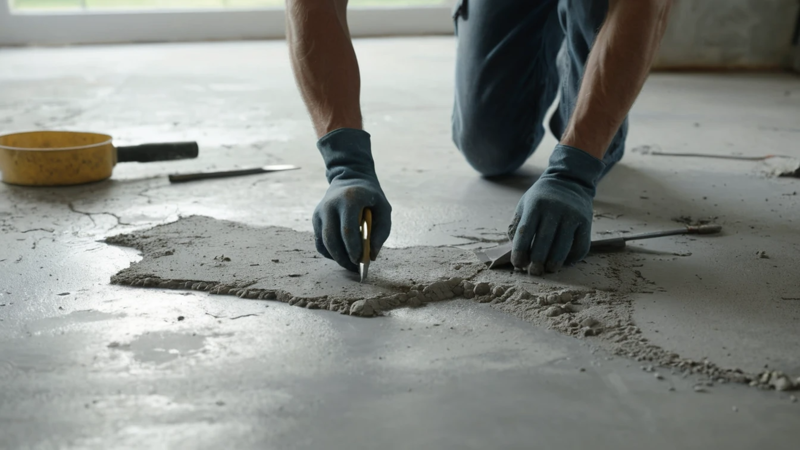
Patching concrete floor made simple with step-by-step tips, tools, and pro tricks for a smooth, durable repair.
Patching a concrete floor is a simple way to fix cracks, holes, and surface damage. It helps restore strength, improve appearance, and prevent further deterioration. With the right tools and steps, you can achieve a smooth, durable finish even as a beginner.
Table of Contents
Patching Concrete Floor: Complete DIY Guide 🛠️
Ever noticed cracks spreading across your concrete floor and wondered, “Will this get worse?”
The short answer is yes—but the good news is, you can fix it yourself.
Patching a concrete floor involves cleaning the damaged area, applying a bonding agent, and filling it with a patching compound. Done right, it restores both strength and appearance. Let’s break it down step by step so you can handle it confidently.
Why Concrete Floors Get Damaged 🧱
Concrete may look tough, but it isn’t indestructible. Over time, it can crack or chip due to various reasons. Temperature changes cause expansion and contraction. This creates stress inside the slab.
Heavy loads also contribute to damage. If you place heavy furniture or machines, pressure builds up. Over time, this leads to cracks and surface wear. Moisture is another silent enemy. Water can seep in and weaken the structure.
Ignoring small cracks makes things worse. They grow bigger and deeper. Fixing them early saves time and money later.
Signs You Need Concrete Floor Patching 🔍
Not every flaw needs repair, but some signs are clear warnings. You should act fast when you notice visible cracks or holes. Uneven surfaces can also indicate underlying damage.
Look for these common signs:
- Cracks wider than 1/8 inch
- Chipped or flaking surface
- Dusting or powdery residue
- Water pooling in certain areas
- Discoloration or stains
If you see any of these, patching is the best solution. It prevents further damage and restores the surface.
Types Of Concrete Damage You Can Fix 🧩
Concrete damage comes in different forms. Each type needs a slightly different approach.
Common Types Include:
- Hairline cracks – Small and shallow
- Deep cracks – Wide and structural
- Spalling – Surface peeling or flaking
- Holes and pits – Caused by wear or impact
Understanding the damage helps you choose the right repair method. Not all patching compounds work the same way.
Tools And Materials You’ll Need 🧰
Before starting, gather everything you need. Having the right tools makes the job easier and faster.
Essential Tools:
- Wire brush
- Chisel and hammer
- Trowel
- Putty knife
- Bucket and mixing tool
Materials Required:
- Concrete patching compound
- Bonding adhesive
- Water
- Safety gloves and goggles
Preparation is key. When everything is ready, the process becomes smooth.
Choosing The Right Patching Compound 🧪
Not all patching materials are the same. Some are designed for small cracks, while others handle deep repairs.
Here’s a simple comparison:
| Type Of Compound | Best For | Drying Time | Strength |
| Pre-mixed patch | Small cracks | Fast | Medium |
| Epoxy filler | Deep cracks | Moderate | High |
| Cement-based mix | Large areas | Slow | Very High |
Pick the one that suits your damage type. Using the wrong product can lead to poor results.
How To Prepare The Surface Properly 🧹
Preparation is the most important step. A clean surface ensures strong bonding.
Start by removing loose debris. Use a wire brush to scrub the area. For deeper cracks, use a chisel to widen them slightly. This helps the patch stick better.
Next, wash the area with water. Let it dry completely before applying the compound. Skipping this step can cause the patch to fail.
Step-By-Step Guide To Patching Concrete Floor 🪜
Now comes the main part. Follow these steps carefully for the best results.
Step 1: Clean The Area
Remove dust, dirt, and loose concrete.
Step 2: Apply Bonding Agent
This improves adhesion between old and new material.
Step 3: Mix The Compound
Follow instructions on the packaging.
Step 4: Fill The Crack Or Hole
Use a trowel to apply evenly.
Step 5: Smooth The Surface
Level it with the surrounding floor.
Step 6: Let It Cure
Allow proper drying time before use.
Take your time with each step. Rushing leads to poor results.
Tips For A Smooth And Professional Finish ✨
Want your repair to look flawless? These tips will help.
- Use a damp sponge to smooth edges
- Apply in thin layers for better control
- Work quickly before the mix hardens
- Keep the area slightly moist during curing
Small details make a big difference. A smooth finish looks clean and lasts longer.
Common Mistakes To Avoid 🚫
Many DIY repairs fail due to simple mistakes. Avoid these to save time and effort.
- Skipping surface cleaning
- Using the wrong patching compound
- Applying too much material at once
- Not allowing enough drying time
“A rushed repair often becomes a repeated repair.”
Take your time and follow the process carefully.
How Long Does Concrete Patching Last ⏳
A properly patched concrete floor can last many years. The lifespan depends on the materials used and the quality of work.
Here’s a quick overview:
| Repair Quality | Expected Lifespan |
| Poor repair | 6 months–1 year |
| Average repair | 2–5 years |
| Professional finish | 10+ years |
Regular maintenance helps extend durability. Keep the surface clean and sealed.
Indoor Vs Outdoor Concrete Repairs 🌦️
Patching indoor floors is easier than outdoor ones. Outdoor surfaces face weather conditions like rain and heat.
Indoor repairs:
- Faster drying
- Less exposure to moisture
- Longer-lasting results
Outdoor repairs:
- Require weather-resistant compounds
- Need proper sealing
- May need frequent maintenance
Choose materials based on the environment.
When To Call A Professional 👷
Some damage is too severe for DIY repair. In such cases, calling an expert is the best option.
You should consider professional help if:
- Cracks are structural
- Floor is sinking
- Large sections are damaged
- Repairs keep failing
Professionals use advanced tools and techniques. They ensure long-lasting results.
Cost Of Patching Concrete Floor 💰
The cost depends on the size of the damage and materials used. DIY repairs are much cheaper than hiring professionals.
| Repair Type | Estimated Cost |
| DIY small patch | Low |
| Medium repair | Moderate |
| Professional repair | High |
Doing it yourself saves money. But for complex repairs, investing in experts is worth it.
Maintenance Tips After Repair 🧼
After patching, proper care is essential. Maintenance keeps the surface strong and clean.
Follow These Tips:
- Clean regularly
- Avoid heavy impact
- Seal the surface if needed
- Check for new cracks
Routine care prevents future damage.
Benefits Of Patching Instead Of Replacing 🔄
Replacing a concrete floor is expensive and time-consuming. Patching is a smarter choice in most cases.
Key Benefits:
- Cost-effective
- Quick solution
- Improves appearance
- Extends floor life
If the damage is not severe, patching is the best option.
How To Prevent Future Concrete Damage 🛡️
Prevention is always better than repair. Simple steps can protect your concrete floor.
- Use sealants to block moisture
- Avoid dropping heavy objects
- Fix small cracks early
- Keep the surface clean
Taking care now saves bigger repairs later.
Conclusion 🎯
Patching a concrete floor is a practical and budget-friendly solution. It fixes cracks, improves durability, and enhances appearance. With the right tools and steps, anyone can do it successfully.
Focus on proper preparation, choose the right materials, and follow each step carefully. A well-done repair can last for years. Start small, stay patient, and you’ll see great results.
FAQs ❓
How To Patch Small Cracks In Concrete Floor?
Clean the crack thoroughly before applying patch material. Use a suitable filler and smooth it evenly. Let it cure completely before use.
What Is Best Material For Concrete Floor Repair?
Epoxy fillers are best for deep cracks. Cement-based mixes work well for large areas. Choose based on damage type.
How Long Does Concrete Patch Take To Dry?
Most patches dry within a few hours. Full curing may take 24 to 48 hours. Always follow product instructions.
Can I Patch Concrete Floor Myself At Home?
Yes, small repairs are easy for beginners. With basic tools, you can fix minor damage. Larger issues may need experts.
Why Does Concrete Floor Crack Again After Repair?
This happens due to poor preparation or wrong materials. Movement and moisture can also cause new cracks. Proper technique prevents this.


Leave a Reply